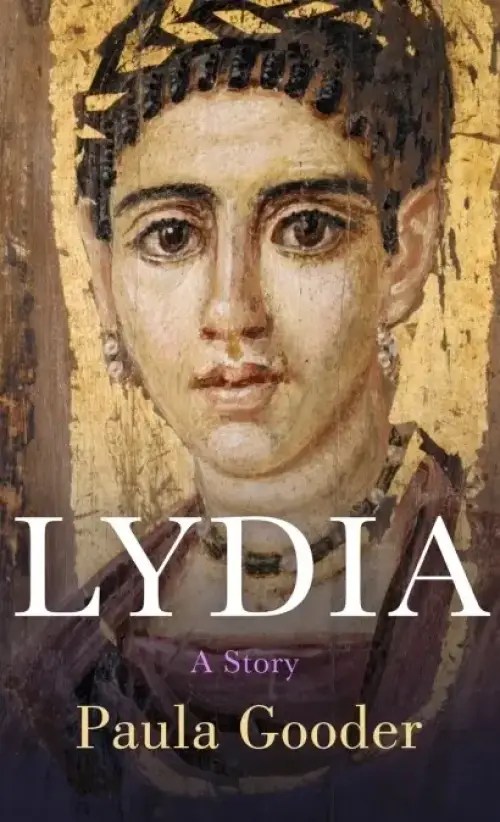
This is a beautiful interpretation and imaginative recreating of the story of Lydia and the church in Philippi and the impact of the letter to the Philippians written by Paul.
Excellently written and backed up by outstanding theological scholarship, I not only enjoyed it but I also learnt a lot.
It made me think hard about the way that the gospel spread in those early centuries after the time of Jesus. Few roads, no phones, no newspapers, relatively few people able to read anyway. So how did the gospel spread and how does it spread now?
Could it be that the way it spread at the beginning is still the very same way now? For all our sophisticated communication and social media platforms, there is nothing more powerful and nothing more fragile than the passing on of the story through loving relationships and connections.
Paula writes about the early Christian communities in a way in which we see so clearly both the power and fragility of this method. Groups of people begin to follow ‘the Jesus way’ based on hearing fragments of the stories. Initially such fragments bind them together but inevitably persecution and misunderstanding causes those early communities to fragment and divide.
As a church leader, I found this picture both realistic and hopeful. Realistic because over and over again, I have seen strong personalities and private agendas cause Christians to part company and fall out of fellowship in connection with one another. Hopeful, because her depiction of the tender relationships within these small house fellowships felt exactly how they were meant to be.
It is an awesome privilege we have to pass on the story of Jesus. Recently, someone leading a quiet day for church leaders got us to reflect on the “vastness of what we do AND the smallness of what we do”. In other words our sharing of our faith story in word or deed can feel an overwhelming responsibility. It can feel like it has vast implications for those who hear us or fail to hear us. And yet what we do is also very small. Jesus gave us lots of ‘small’ metaphors: we offer a cup of water, we act like yeast in a loaf of bread, we sow seeds. What we do can feel so small and, let’s be honest, sometimes it can feel so ineffective.
It was good to read a book that told me that the sharing of faith has always felt this way.
It was also a book about the power of difference to drive people apart and fracture relationships. Those very people concerned about difference had not realised that those very relationships they were damaging were the vital web of threads holding the whole thing together.
Historically it was so insightful, I learnt a great deal about Roman society which greatly helps my reading of the new Testament but it was personally very challenging.
It caused me to think a lot about how a story travels through time, through relationships and what the impact of each small step of the story has.
These days we are familiar with the idea of the “meme”: hHow a hate speech here or an ounce of resentment stored and churned there can ferment and grow.
In parallel with this book I was also watching the TV documentary called ‘A House through Time’, following 29 occupants of a set of apartments in London and a second set of apartments in Berlin through the years 1920 to 1945.
What became clear was that it had been harsh retribution which had stored up hate and resentment in an entire population which then led to 12 million people, each using just one vote each to put Hitler into power who in turn put the central ideology of the Nazi party into action ‘the blaming and eradication of the Jews’ – “the final solution”. And all of these sound like big ideas and huge vast movements but they didn’t play out in the ether of political discussion, they played out in the lives of private individuals and they came about because of small decisions.
Many such small steps led to the moment a mother called Ruth was summoned to a synagogue with her two little boys age 4 and eight weeks old and (along with 400 other that day) being sent on a five-day train journey which ended in a forest in Estonia where she and hundreds of others with her were marched to a pit, forced to undress and lie down on the bodies of those already piled up, before being shot .
It was the sharing of an evil story, the sharing of an untruth (that the Jews were engaged in some international conspiracy) that led to an individual, a recruited Estonian soldier to raise a rifle and shoot this mother and her boys until they were dead. It was the fear of difference that drove this evil story but did that young woman and the hundreds with her that day really looks so terrifyingly different?
It is the impending elections in the US which have brought these two stories together in my mind. The transmission of the good news as opposed to the transmission of fake news. Everything on the radio currently says that this election will be very close and that therefore every vote counts.
A useful reminder that none of us should ever think that our voice doesn’t count or our small actions don’t make a difference. We have a story to share, the best story of all, and we have a love to reveal in our actions be they large or small.
May we neither faint at the vastness of the task, nor despair at the smallness of our words and actions. God ‘who is able to do far more than all you ask or imagine will keep your hearts and minds in the knowledge and love of God’.
 Live Life Loved
Leave a comment